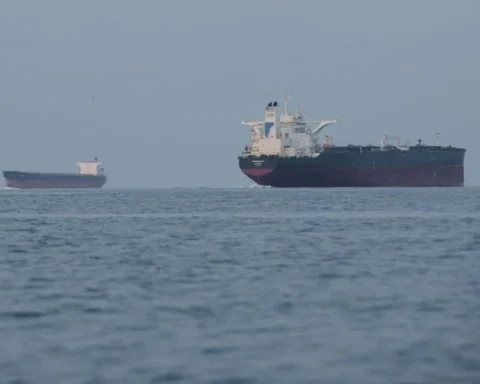

A deepening supply emergency radiating outward from the Middle East conflict is tightening its grip on Asia’s industrial heartland — and economists warn it is only a matter of time before the effects land squarely on American households.
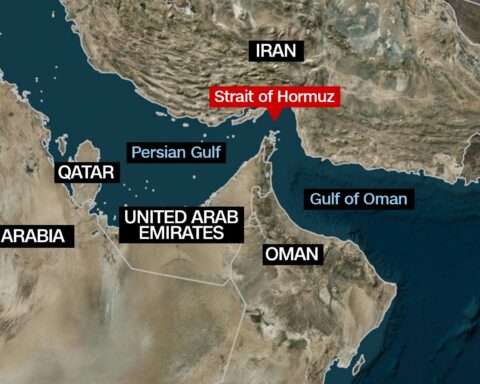
April 24, 2026 — In ordinary times, the distance between a petrochemical plant in Singapore and a grocery store in suburban Ohio seems vast and abstract. But the Middle East war that closed the Strait of Hormuz has collapsed that distance in ways that are only beginning to register in the United States. The supply disruption that has been building across Asia for weeks is no longer just Asia’s problem.
Gas stations from Bangkok to Busan are rationing fuel. Hospitals across the region are scrambling to secure medical supplies. Plastic bag manufacturers — an unglamorous but essential link in the global packaging chain — are already warning customers about shortfalls. Meanwhile, in Washington and on Wall Street, the full weight of what is happening has yet to sink in.
A Crisis That Doesn’t Announce Itself
Part of what makes this supply shock so treacherous is its gradual nature. Unlike a hurricane or a financial crash, it doesn’t arrive with a single dramatic headline. It seeps in through procurement spreadsheets, shipping logs and factory output reports — invisible to most people until the effects reach a checkout counter or a car dealership lot.
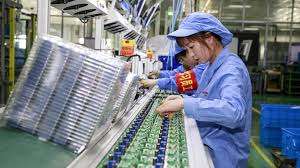
About half of all goods consumed in the United States originate from Asia. That figure, stark as it is, understates the dependency when you factor in the intermediate inputs — the plastics, metals, chemicals and components — that feed into products assembled elsewhere. When Asian factories slow down, American supply chains eventually slow down too, whether those products are assembled in Vietnam, Mexico or Indiana.
The IMF was direct in its April 2026 World Economic Outlook about what is at stake. Asia entered this year on strong economic footing after weathering the disruptions of 2025’s tariff battles. Growth across the region was solid, trade was brisk and inflation was subdued. The war has reversed that momentum. The Fund now projects regional inflation climbing to 2.6 percent this year — four-tenths of a percentage point higher than its January forecast — driven by surging energy costs that are filtering through into transport, manufacturing and food production simultaneously.
The Materials Most at Risk
Not all shortages are created equal. The materials most immediately threatened by the strait’s closure are the ones that make modern manufacturing possible at scale but rarely appear on a consumer receipt. Polypropylene and polyethylene — the two most common plastics in global manufacturing — flow heavily through the Middle East. So does the sulphur that feeds fertilizer production, the aluminum that goes into cars and aircraft, and the rubber that ends up in tires, medical gloves and conveyor belts.
Several major petrochemical producers in South Korea and Singapore have already declared force majeure, a signal that the disruption has moved from inconvenience to genuine supply emergency. Aluminum, in particular, is a concern because it is not held in large strategic reserves. Once downstream inventories run down, the pipeline to replenishment is slow.
South Korea, Japan and much of Southeast Asia rely on Middle Eastern energy imports for a significant share of their industrial fuel needs. When those imports are disrupted, the effects don’t stop at the factory gate — they reach the workers trying to get there, the trucks trying to move finished goods, and the ships trying to leave port on schedule.
Asia’s Spiraling Supply Emergency Is Now America’s Business Too
American companies spent the better part of the last several years building more resilient supply chains, prompted first by the pandemic and then by the shock of sudden tariff escalations in 2025. Those efforts have bought some time. U.S. imports from China fell sharply last year, replaced in large part by sourcing from other Asian economies — Vietnam, Thailand, Malaysia, India. That diversification insulates American firms from a single-point failure.
But it does not insulate them from a regional failure. If the energy crisis continues to deepen across all of Asia — not just one country — the diversified sourcing strategy offers limited protection. The problem isn’t which factory; it’s whether any factory in the region can operate at full capacity.
Analysts are careful to distinguish this moment from the pandemic-era shortages. Supply chains are stronger. Inventories are better managed. The IMF’s baseline scenario assumes the conflict proves short-lived, allowing energy markets to stabilize. Global growth falls to 3.1 percent but does not collapse.
Yet the IMF is equally explicit that the downside scenarios are severe and that the risks lean heavily in the wrong direction. A prolonged disruption — one that lasts into 2027 — would cut growth in Asia’s major economies by roughly two full percentage points relative to the baseline, with inflation rising above six percent in the most adverse case.
What the U.S. Government and Businesses Are Watching
Behind the scenes, supply chain executives and government trade officials are doing what they failed to do quickly enough in 2020: running scenario models, talking to logistics partners and trying to determine where the first visible shortages will emerge if the strait remains closed.
The consensus view among analysts is that plastics and chemicals will feel the pressure first, followed by aluminum. Auto production is considered the most vulnerable major manufacturing sector, given its dependence on aluminum and its tight just-in-time inventory systems. Agrochemicals and fertilizers are a longer-term concern, with implications not just for industrial supply chains but for food production.
None of this means American consumers will soon face pandemic-style empty shelves. The buffers built over recent years are real. But buffers run out. And the clock, as of April 24, 2026, is running.