President Donald J. Trump announced on Thursday that the United States would decertify all aircraft manufactured in Canada and threatened to impose a 50 percent tariff on any such planes sold into the American market, framing the move as retaliation for Canada’s alleged refusal to certify advanced business jets produced by the U.S. company Gulfstream Aerospace.
The declaration, posted late Thursday on Truth Social, came amid a series of escalating disputes between Washington and Ottawa under Trump’s second term. As of January 30, 2026, the threat has sent ripples through the aerospace industry, financial markets, and diplomatic channels, highlighting the fragility of North American trade relations at a time when broader economic pressures, including potential deals involving China, loom large.
Trump’s post accused Canadian regulators of “wrongfully, illegally, and steadfastly” blocking certification for the Gulfstream 500, 600, 700, and 800 series jets, which he described as “one of the greatest, most technologically advanced airplanes ever made.” In response, he declared that the U.S. was “hereby decertifying their Bombardier Global Expresses, and all Aircraft made in Canada,” until Gulfstream received full approval in Canada. He further warned that failure to resolve the issue immediately would trigger a 50 percent tariff on Canadian aircraft imports.
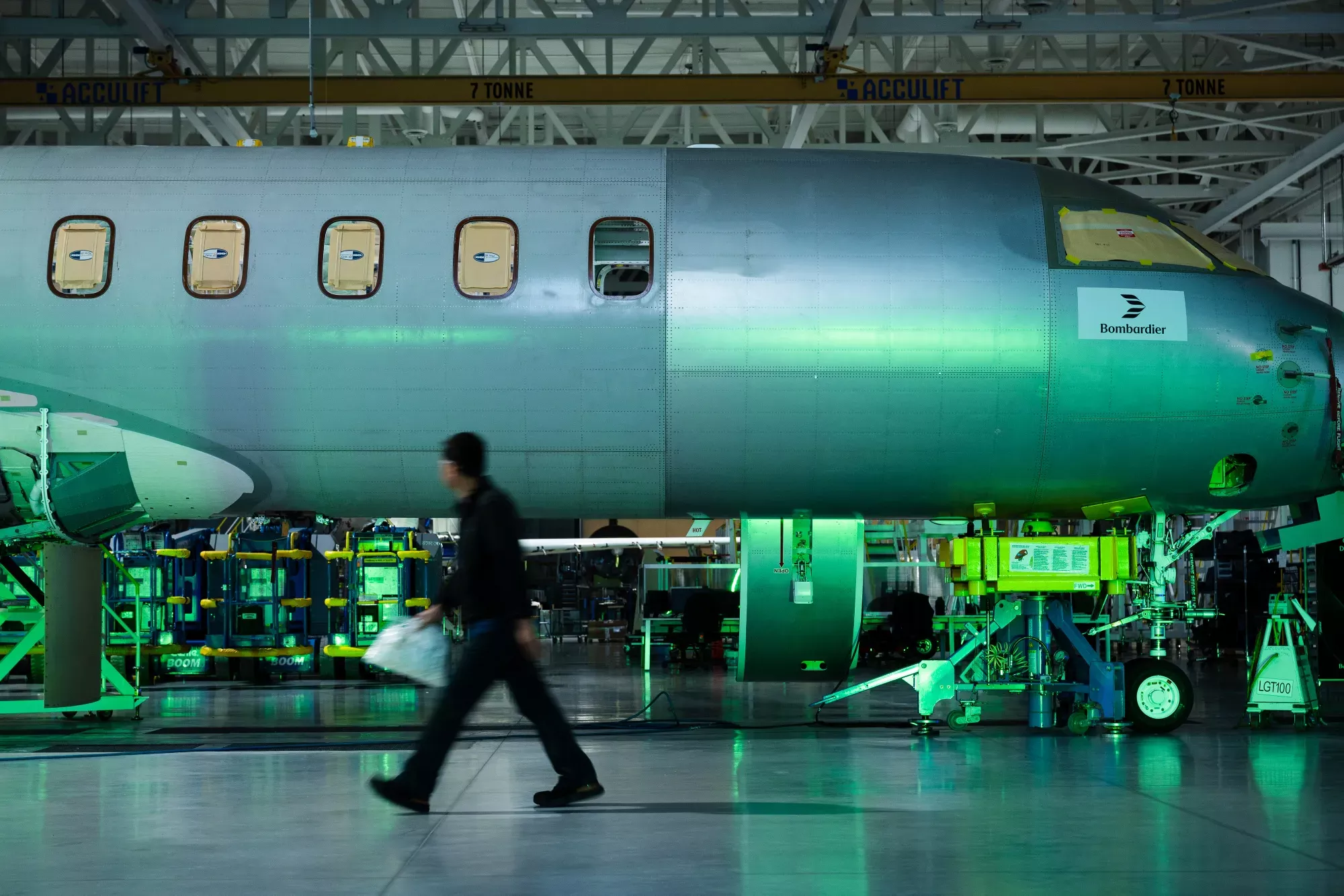
The announcement targets Bombardier, Canada’s flagship aerospace firm based in Quebec, whose Global Express business jets are widely used by corporate and private operators worldwide. Industry data indicate more than 150 Global Express aircraft are currently registered and operating in the United States, serving over 100 operators. A sudden decertification could ground these planes, disrupt business aviation, and force costly recertification processes or fleet replacements.
Trump Says He’s Decertifying Canada-Made Aircraft and Threatens 50% Tariffs
The core of Trump’s grievance centers on bilateral aviation certification reciprocity, a longstanding practice under international agreements like those overseen by the International Civil Aviation Organization. Gulfstream, a subsidiary of General Dynamics headquartered in Savannah, Georgia, has reportedly faced delays in obtaining Canadian approvals for its newer models, which Trump portrayed as protectionism favoring domestic producers like Bombardier.
White House officials sought to clarify that the president was not proposing to immediately ground planes already in operation, emphasizing that the threat applied to future certifications and sales. Yet the language in Trump’s post left little ambiguity, raising alarms among aviation safety experts who questioned whether the executive branch could unilaterally override Federal Aviation Administration (FAA) certifications without due process.
Bombardier responded swiftly, stating it was in close contact with the Canadian government and underscoring that its facilities and technicians met all FAA standards. The company highlighted its significant U.S. footprint, employing thousands across nine facilities and actively expanding operations stateside. Shares in Bombardier dipped modestly in after-hours trading following the announcement, reflecting investor concerns over potential market disruptions.
Roots of the Dispute: Certification Delays and Reciprocity Concerns
Aviation certification involves rigorous safety, performance, and environmental reviews, often taking years for new models. Gulfstream’s advanced jets, featuring long-range capabilities and cutting-edge avionics, have been marketed aggressively in global markets, including Canada. Trump claimed Ottawa’s delays effectively prohibited Gulfstream sales north of the border while allowing Bombardier unrestricted access to the U.S. market—a claim Canadian officials have yet to fully address publicly.
This episode fits into a pattern of trade friction since Trump’s return to office. Earlier threats included potential 100 percent tariffs on Canadian goods if Ottawa pursued closer ties with China, and broader criticisms of Prime Minister Mark Carney’s economic policies. Carney has urged respect for Canadian sovereignty in recent statements, framing U.S. pressure as overreach.
Analysts note that aircraft trade falls under complex bilateral and multilateral frameworks, including the U.S.-Mexico-Canada Agreement (USMCA), which replaced NAFTA and includes provisions on regulatory cooperation. Imposing unilateral tariffs or decertifications could invite legal challenges through the World Trade Organization or dispute settlement mechanisms, potentially straining alliances already tested by immigration, energy, and defense issues.
Industry and Economic Fallout
The aerospace sector, a cornerstone of both economies, employs hundreds of thousands across supply chains. Bombardier’s Global series competes directly with Gulfstream in the ultra-long-range business jet segment, a lucrative niche serving executives, governments, and high-net-worth individuals. A 50 percent tariff would dramatically increase costs for Canadian imports, likely shifting demand toward U.S. or European alternatives like Dassault or Embraer.
Experts warn of cascading effects: higher prices for operators, supply chain disruptions for parts and maintenance, and retaliatory measures from Canada. Ottawa could target U.S. exports in sensitive sectors, from agriculture to technology, echoing past trade wars. Financial markets reacted cautiously, with broader indices showing minor volatility as investors assessed the credibility of Trump’s threats—many of which have been dialed back in previous instances.
Conservative voices on outlets like Fox Business portrayed the move as a necessary defense of American industry against unfair practices, praising Trump’s willingness to confront allies when national interests are at stake. They highlighted Gulfstream’s technological edge and accused Canada of protectionism.
Diplomatic Ramifications and Broader Context
The threat arrives against a backdrop of strained U.S.-Canada relations. Prime Minister Carney, a former central banker with deep ties to global finance, has sought to balance economic pragmatism with sovereignty assertions. Recent reports of U.S. contacts with Alberta separatists added fuel to tensions, prompting Carney to demand respect for Canadian unity.
European and international observers expressed concern that such unilateral actions could undermine confidence in North American stability, particularly as Arctic security and supply chain resilience gain prominence amid great-power competition. The dispute also intersects with ongoing debates over trade diversification, with Canada exploring options beyond the U.S. market.
Administration supporters argue Trump’s approach forces fair reciprocity, protecting jobs at Gulfstream and related suppliers. Critics, including some Republican lawmakers wary of alienating a key ally, have privately questioned the wisdom of targeting a sector with deep cross-border integration.
Potential Paths Forward
Resolution could come through quiet negotiations, with aviation authorities from both sides accelerating reviews. Trump has a history of using tariff threats as leverage, often leading to concessions without full implementation. Bombardier and Gulfstream stakeholders are likely pressing for de-escalation to avoid prolonged uncertainty.
As the situation unfolds, the episode underscores the challenges of maintaining stable trade ties in an era of assertive economic nationalism. For now, the aerospace industry braces for turbulence, while diplomats work to prevent a full-blown crisis.
Focus keywords: Trump Canada aircraft tariffs, Trump decertifying Bombardier, 50% tariffs Canadian planes, Gulfstream certification dispute, Trump Bombardier Global Express, US Canada trade war aviation, Trump Truth Social aircraft threat, Canada aerospace tariffs 2026.