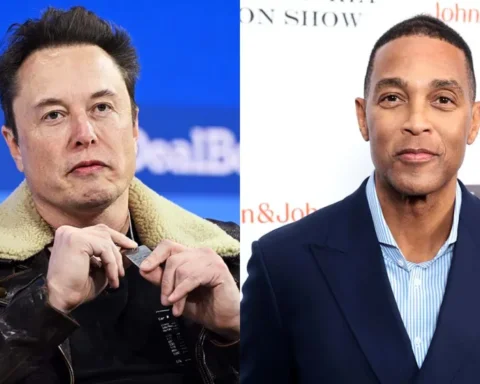
In a candid late-night television appearance, former CNN anchor Don Lemon defended his journalistic coverage of a disruptive anti-ICE protest at a church in St. Paul, Minnesota, insisting during an interview with Jimmy Kimmel that he was there to document events as a reporter, not to participate as a protester, amid federal charges stemming from the incident that have sparked intense debate over press freedoms and immigration enforcement.
The interview, which aired on “Jimmy Kimmel Live!” on February 2, 2026, marked Lemon’s first extended public comments since his arrest late last month. Lemon, now working as an independent journalist, described the January 18 protest at Cities Church, where demonstrators interrupted a service to protest against Immigration and Customs Enforcement policies and the presence of a pastor who also serves as a local ICE official. Federal prosecutors have charged Lemon with conspiracy to deprive individuals of rights and violating the Freedom of Access to Clinic Entrances (FACE) Act, allegations he and his supporters have dismissed as overreach aimed at intimidating journalists.
The episode unfolded against a backdrop of heightened tensions over the Trump administration’s aggressive immigration crackdown, including mass deportations and workplace raids that have drawn widespread protests nationwide. The Minnesota incident, in which protesters entered the church chanting demands for justice in a separate case involving an immigrant’s death, led to chaotic scenes: congregants, including families with children, fled in fear, and some reported feeling intimidated. Lemon livestreamed parts of the event on social media, interviewing participants and capturing the confrontation.
A Dramatic Arrest and Federal Charges
Lemon recounted the arrest in vivid detail during the Kimmel interview. He said his attorney had offered for him to surrender voluntarily, but federal agents—about a dozen, by his account—approached him in a Los Angeles hotel lobby as he headed to his room. “I pressed the elevator button, and then all of a sudden, I feel myself being jostled and people trying to grab me and put me in handcuffs,” Lemon told Kimmel. He described the moment as feeling like a mugging until he realized it was law enforcement. Released without bail after a court appearance, Lemon faces serious federal charges that could carry significant penalties if convicted.
Prosecutors allege that Lemon coordinated with protest organizers and participated in a “takeover-style attack” that disrupted worship and intimidated congregants, violating their civil rights to practice religion freely. Lemon has maintained that he was credentialed as a journalist following a group to report on their actions, not directing or joining them. “I went there to chronicle and document and record what was happening,” he emphasized on the show. “I was following that one group around. And so that’s what I did. I reported on them.”
Kimmel, framing the arrest with characteristic wry humor, quipped that Lemon had been detained for “committing journalism, which is a very serious crime under our current administration.” The host pressed on the distinction between protesters’ rights and a journalist’s role in covering them, to which Lemon replied cautiously, noting he was limited in what he could say due to pending litigation but reiterating, “There is a difference between a protester and a journalist.”
Don Lemon Defends His Reporting of Anti-ICE Protest in Minnesota During Interview With Jimmy Kimmel
Lemon’s appearance highlighted broader concerns about press freedom in an era of polarized immigration debates. He suggested the aggressive arrest tactic—despite his willingness to turn himself in—was intended to “embarrass” and “instill fear” in critics of administration policies. “They want to intimidate you,” he said, adding that he refused to let the ordeal “steal my joy,” though he acknowledged the gravity: “This is very serious. I mean, these are federal criminal charges.”
The protest itself stemmed from outrage over ICE operations in Minnesota, including a high-profile case involving the death of an immigrant detainee named Renee Good, whose name protesters chanted inside the church. The pastor targeted, reportedly an ICE field office official, has drawn scrutiny for blending religious leadership with federal enforcement duties—a combination critics argue undermines the separation of church and state.
Lemon’s coverage went viral, with clips showing tense exchanges between demonstrators and churchgoers. Supporters, including press advocacy groups like the Committee to Protect Journalists and Reporters Committee for Freedom of the Press, condemned the charges as a chilling threat to newsgathering. They argue that journalists routinely enter public or semi-public spaces to document events without facing criminal liability, even when those events involve civil disobedience.
Conservative commentators and some Trump administration allies have portrayed Lemon’s actions differently, accusing him of crossing into activism. Outlets like Fox News highlighted parishioners’ accounts of fear and disruption, with children crying and families fleeing, framing the incident as an assault on religious freedom rather than protected speech. Critics pointed to Lemon’s past controversies at CNN, suggesting his independent status did not shield him from accountability.
Press Freedom vs. Public Order in a Divided Nation
The case raises thorny questions about the boundaries of journalistic privilege. While the First Amendment offers robust protections for reporting on public events, federal laws like the FACE Act—originally aimed at clinic blockades—have been invoked here to protect worship services from interference. Legal experts note that intent matters: if Lemon can demonstrate he was solely documenting rather than aiding disruption, defenses could include newsgathering exemptions or lack of criminal mens rea.
Lemon, who left CNN in 2023 amid contract disputes and has since built a following through podcasts and social media, positioned the interview as a stand for independent journalism. He quoted biblical passages in earlier online statements about persecution, drawing parallels to historical figures facing unjust charges. Kimmel’s sympathetic tone and the audience’s applause underscored support from liberal-leaning circles, where the arrest is seen as emblematic of authoritarian tendencies in immigration enforcement.
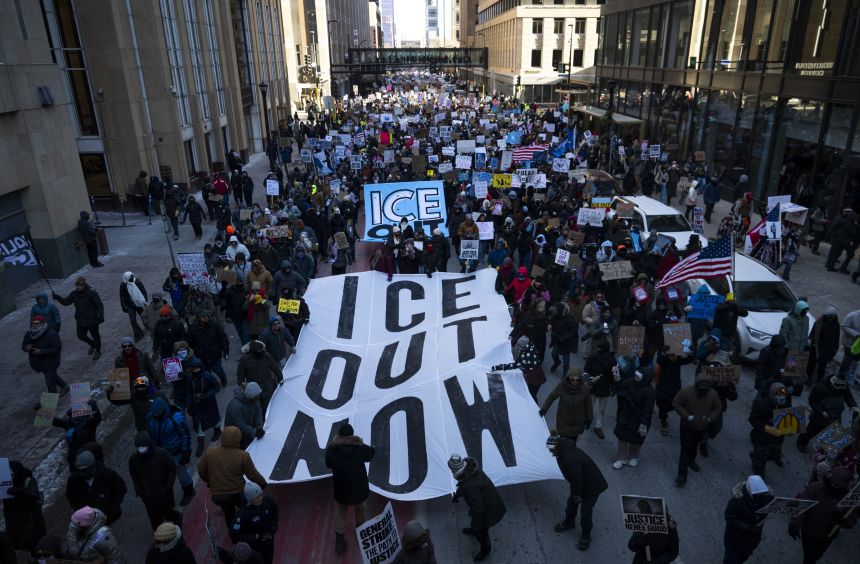
Public reaction has split along familiar partisan lines. Progressive activists rallied online with hashtags like #FreeDonLemon and #JournalismIsNotACrime, while conservative voices mocked the former anchor’s predicament or cheered what they viewed as long-overdue accountability. The incident has also fueled larger protests in Minneapolis and beyond, with thousands marching against ICE tactics in the days following Lemon’s arrest.
Lemon’s next court date in Minneapolis is set for February 9, where pretrial motions could clarify the scope of evidence, including his livestream footage. Whatever the legal outcome, the episode has thrust questions of media access, protest rights, and federal power into the national spotlight once more.
As immigration remains a flashpoint in American politics, Lemon’s defense on national television serves as both personal rebuttal and broader commentary on the risks journalists face when covering contentious issues. In an environment where trust in institutions is frayed, his case may test the resilience of press protections amid escalating enforcement and cultural divides.
This article is based on reports from BBC, CNN, NBC, Fox News, New York Times, Associated Press, Reuters, The Hollywood Reporter, Rolling Stone, People, and other media outlets.
Focus keywords: Don Lemon Jimmy Kimmel interview, Don Lemon defends reporting, anti-ICE protest Minnesota, Don Lemon arrest Minnesota church, Cities Church St Paul protest, Don Lemon federal charges, journalism press freedom ICE, Trump immigration enforcement protest