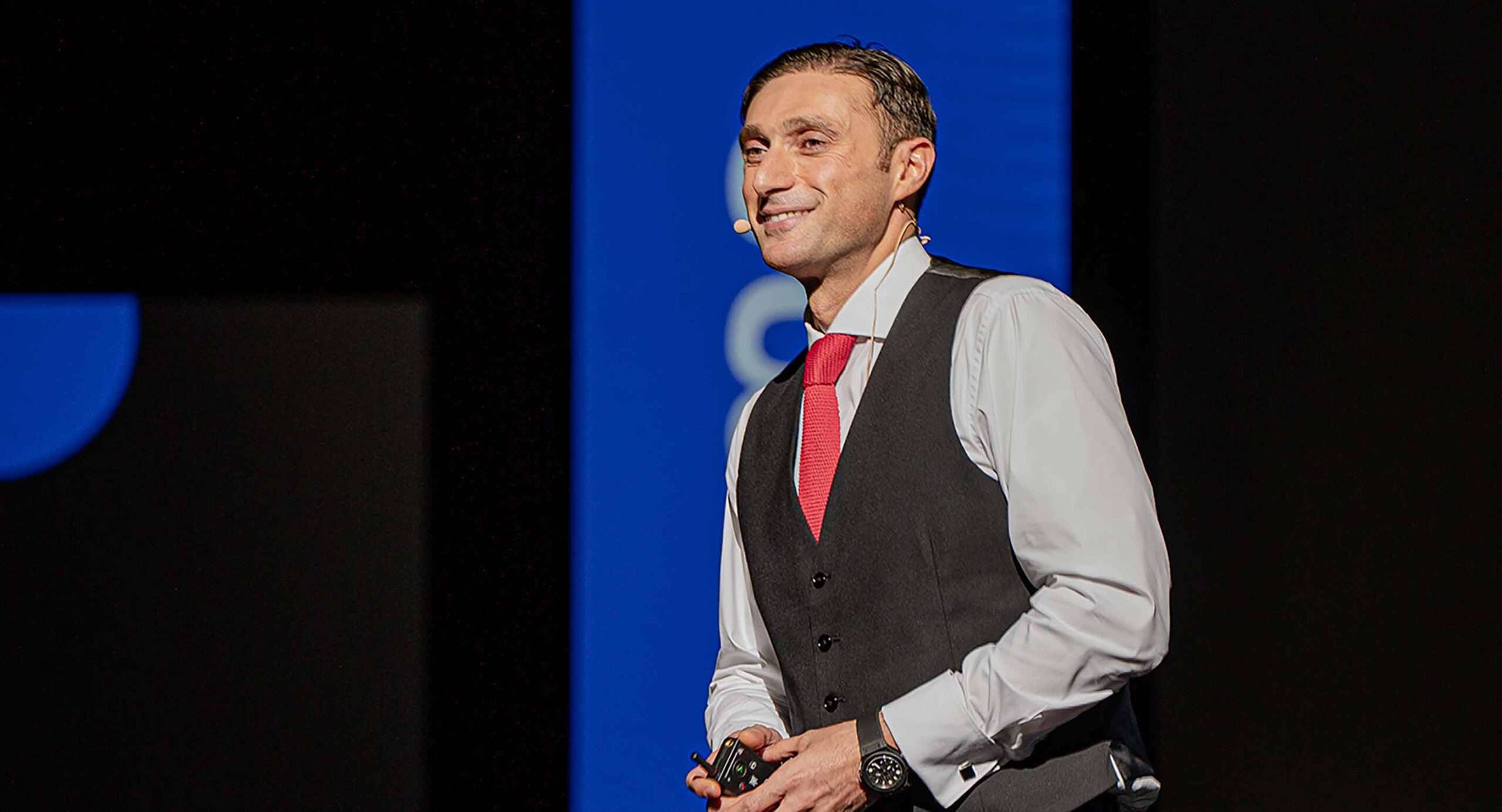

Giorgi Trapaidze on why outdoor advertising is becoming smarter — and how Alma is leading the shift
Thank you for reading this post, don't forget to subscribe!Alma has continued to strengthen its position as a leading outdoor advertising company in Georgia, expanding its infrastructure and introducing data-driven solutions that are reshaping how brands measure and plan their campaigns. The company, which has been named a multiple-time winner of the Golden Brand award, is increasingly focused on combining large-scale visibility with real-time analytics, offering advertisers a clearer understanding of who sees their messages, where and with what impact.
In this interview, Giorgi Trapaidze, Director of Alma, discusses how data is transforming the industry, what defines effective outdoor campaigns today and why the right place and time remain at the core of brand success.
Q. Alma has been a Golden Brand winner for several consecutive years. What does maintaining this status mean for your company?
A. For us, this recognition is an important validation that our development strategy is on the right track. At the same time, it comes with responsibility. It is not only about acknowledging past achievements – it pushes us to continuously evolve, innovate and deliver more effective and modern advertising solutions to the market.
Over the years, Alma has undergone significant transformation, both technologically and strategically. We have expanded our infrastructure, introduced new approaches and developed products that set higher standards for the outdoor advertising industry. A strong focus has been placed on data-driven decision-making and on creating tools that allow brands to better plan and evaluate their campaigns.
Q. Measuring the effectiveness of outdoor advertising has long been a challenge. How does your new reporting system address this?
A. This has indeed been one of the key challenges in the industry. Today, with the advancement of technology and data analytics, this is changing rapidly.
Alma’s reporting system was developed precisely to address this need. It allows companies to objectively assess campaign performance through detailed analysis. We can evaluate key indicators such as visibility potential, audience volume and overall campaign effectiveness. As a result, brands are able to make more informed decisions both when planning campaigns and when evaluating outcomes.
Q. You now offer real-time audience insights in collaboration with IPN and 112. How does this system work and what does it enable for brands?
A. The system is based on combining and analyzing multiple data sources. Through our collaboration with IPN and 112, we are able to better assess traffic intensity across the city and gain a clearer picture of audience demographics.
This means brands can understand not only how many people are likely to see their advertisement, but also gain insight into the general profile of those audiences. It allows for more precise campaign planning — from selecting optimal locations to allocating budgets more efficiently.
Q. How does this level of analytics change advertising strategy? Can clients adjust campaigns in real time?
A. Data-driven analytics significantly improves the planning process. Previously, decisions were often based on experience and general assumptions. Today, they can be grounded in concrete data.
At this stage, our reporting system is particularly valuable post-campaign, providing detailed insights into performance — including location efficiency, audience scale and overall impact. This enables brands to refine future campaigns with much greater precision.
Q. What defines an effective OOH campaign today?
A. An effective campaign is always the result of several factors working together. Creativity is essential, strong visuals capture attention quickly. However, location and frequency are equally important.
Increasingly, data-driven planning plays a critical role. When brands can rely on real insights to define their audience, locations and scale, they use outdoor advertising far more effectively. Ultimately, it is the combination of creativity, placement, frequency and data that creates both visibility and a stronger emotional connection with audiences.
Q. You often say that brand success starts with appearing at the right time and place. What does that mean in a modern urban context?
A. In today’s urban environment, the “right time” and “right place” mean aligning your message with the natural movement of people. Cities are dynamic — audience flows vary by location and time of day.
Outdoor advertising becomes most effective when a brand appears where people naturally move: major intersections, central roads and key urban hubs. In these spaces, communication feels more organic and impactful.
Q. What makes a location “high-performing” in outdoor advertising?
A. Several factors define this. Traffic and pedestrian flow are key, as they determine audience volume. At the same time, the urban context matters — whether the area is commercially active, how frequently people pass through it and how visible the placement is from different directions.
Q. Which locations in the capital city of Tbilisi stand out as the most effective?
A. Typically, the most effective locations are those where major traffic and pedestrian flows intersect. Central highways, large intersections and key urban nodes consistently deliver the highest visibility.
These are the spaces where brands can reach large audiences in a short period of time, which is why they are considered premium placements.
Q. How important is integration with digital channels? Can OOH become central to an omnichannel strategy?
A. Marketing today is increasingly integrated. Different channels no longer operate independently — they reinforce each other.
Outdoor advertising plays a crucial role by creating large-scale visibility in physical space. When combined with digital channels, it creates a strong omnichannel effect. A consumer may first encounter a brand in the city and later see it again online — this repetition significantly strengthens brand impact.
Q. What drives Alma’s long-term market leadership — technology or people?
A. In reality, these two are inseparable. Technology is important, but its true value is created by the people behind it.
At Alma, our growth has been driven by both — expanding our technological capabilities while building a highly professional team that understands market dynamics and continuously introduces new opportunities for brands.
Q. How do you see the future of outdoor advertising in Georgia?
A. The industry is steadily moving toward a more technology-driven and data-oriented model. Demand for tools that enable better planning and more accurate measurement will continue to grow.
Ultimately, outdoor advertising is evolving into a medium that combines scale, technology and analytics — allowing brands to manage communication in urban space more effectively than ever before.